Table of Contents
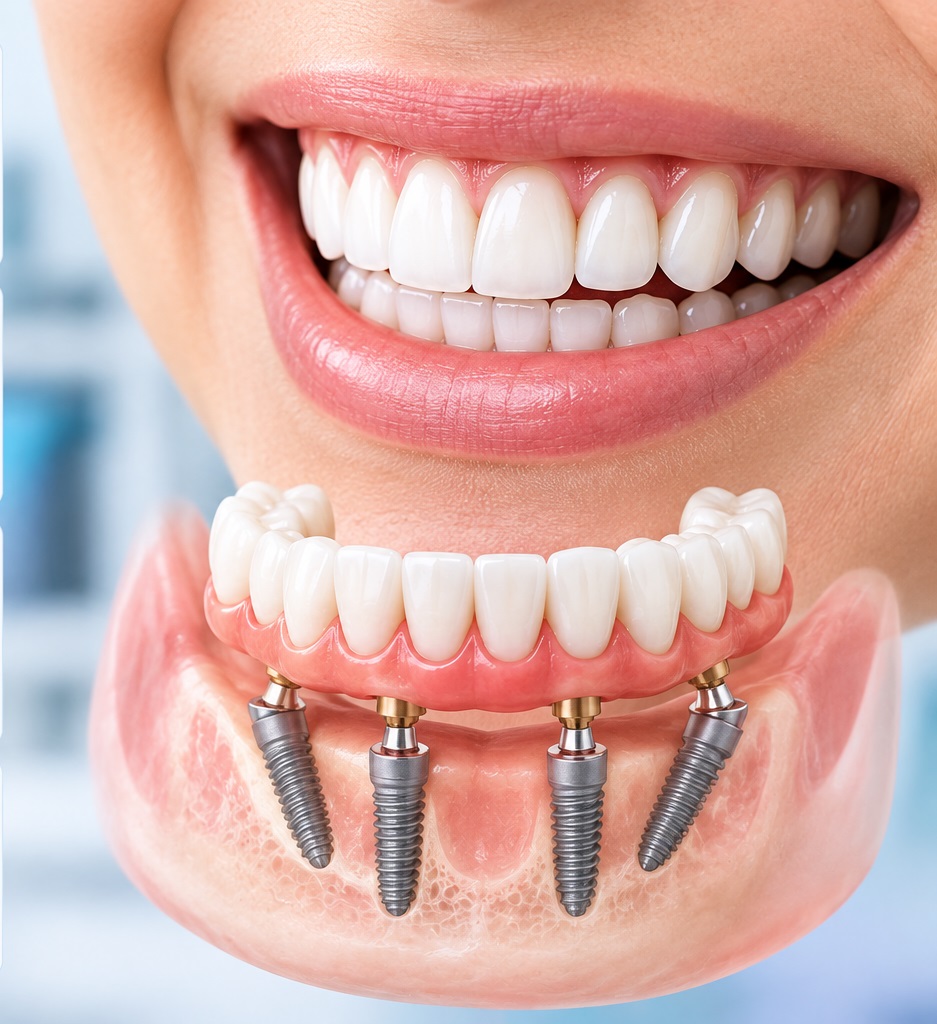
All-on-4 uses four strategically placed implants to support a complete set of fixed teeth, and its success depends heavily on where those implants go. Placed in the wrong position, even a good implant can cause problems with bite, cleaning, or longevity.
That is why 3D imaging have become such a big part of modern full-arch treatment. It is general information only and does not replace an assessment by a dentist or implant surgeon.
Why Planning Matters So Much in All-on-4
All-on-4 relies on a small number of implants doing a big job. The back implants are often angled to make use of available bone and avoid structures such as sinuses and nerves. Each implant must be:
- Anchored in enough healthy bone to hold securely
- Positioned at the right angle and depth to support the teeth evenly
- Spaced correctly so the final teeth are strong and easy to clean
Because there is margin for error, careful planning before surgery matters as much as the surgery itself.
3D Imaging: Seeing Beneath the Surface
What a standard X-ray cannot show
A traditional two-dimensional X-ray gives a flat picture. It can show some bone and tooth information, but it cannot show bone width, the exact path of nerves, or the shape of the sinuses in three dimensions.
Cone beam CT (CBCT) scans
A CBCT scan takes images as the machine moves around your head, then builds them into a 3D model. It typically shows:
- Bone height and width in each area of the jaw
- Bone density and quality, which affect stability
- The position of nerves, especially the inferior alveolar nerve in the lower jaw
- Sinus size and position in the upper jaw
- Existing teeth, roots, and any infection or cysts
- Areas where grafting may be needed
Intraoral scans and photos
Alongside a CBCT, the clinic may use a handheld intraoral scanner to capture the surface of your teeth and gums, plus photos and bite records.
Radiation and safety
CBCT uses radiation, though doses are low and the scan is used only when it will change planning.
Digital Treatment Planning
Once the scans are combined, planning software lets the clinician design the treatment on screen before touching your mouth.
What the plan covers
- Implant positions: The angle, depth, and length of each implant
- Prosthetic design: The shape and position of the final teeth, so implants are placed to support them, not the other way around
- Bone reduction needs: Whether any bone must be smoothed to make room for the teeth
- Risk areas: Distances to nerves and sinuses are measured
- Graft needs: Where bone may be inadequate
Seeing the plan
Many clinics show patients the plan on screen, often alongside a preview of the planned teeth. This can help you understand what will happen and ask better questions.
What to Expect in Your All-on-4 Journey
While every clinic differs, the process commonly includes:
- Consultation: check-up, medical history, and discussion of your goals
- Imaging: CBCT, intraoral scans, photos, and bite records
- Planning: Digital design of the implants and teeth, with options explained
- Preparation: Treating gum disease, and planning any extractions
- Surgery day: If needed, implant placement with guidance, and often temporary teeth fitted
- Healing: Several months while the implants integrate with the bone, with follow-up checks
- Final teeth: A custom prosthesis is made and fitted once the gums and implants are ready
- Maintenance: Regular reviews and professional cleans
Timelines vary with your case and health.
Final words
3D imaging and guided surgery have changed how All-on-4 treatment is planned and delivered. CBCT scans reveal what lies beneath the surface, digital planning links the surgery to the final teeth, and guides help carry the plan into the mouth. Used well, they can improve and help patients understand their treatment.
But technology is a tool, not a guarantee. The quality of your assessment, your own health, and your aftercare all shape the result.
If you are considering All-on-4, book a consultation to discuss your options. We will explain what imaging you need, how your treatment would be planned, and what outcome is realistic for you.
Authors Detail
Dr. Manish Shah
BDS, MBBS, MMED (Sleep Medicine)
Dr. Manish Shah is a dual-qualified dentist and medical doctor with over 15 years of experience in cosmetic, implant, and restorative dentistry. He holds a Master’s in Sleep Medicine and specialises in TMJ disorders, sleep apnea, and craniofacial pain. Dr. Manish Shah provides complete dental care at Sydney Dental Implant Centre.
