Table of Contents
The nerves are real. You have done your research, you have had the consultations, and you have finally committed to getting your smile sorted with all on four dental implants. But now comes the part that keeps you up at night. What happens after you walk out of that clinic?
Patients who have been through this process consistently say the anxiety about recovery is worse than the recovery itself. So let us walk through exactly what those first 30 days look like.
Why All on 4 Dental Implants Change the Game
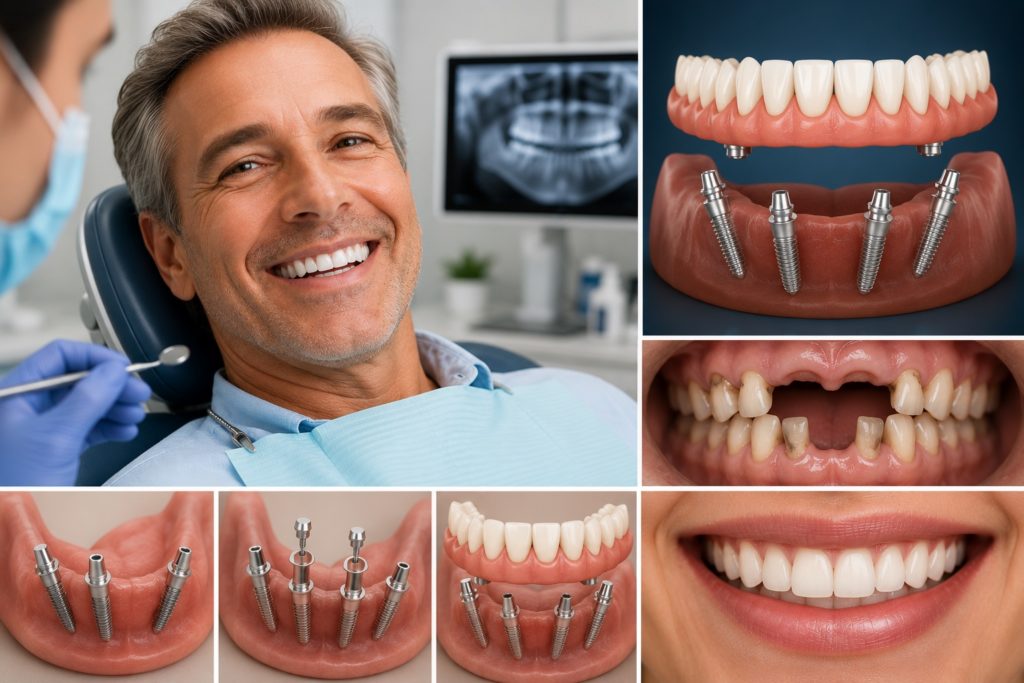
All on four dental implants work differently from a standard implant. Rather than one implant per missing tooth, four implants placed at careful angles carry the whole arch. Bone grafting usually isn’t needed at all, which cuts weeks off the process compared to some other implant routes.
Plenty of patients walk out the same day wearing a full set of temporary teeth. Feels a bit unreal when it happens. Still, that first month carries more weight than people tend to assume going in.
Days 1 to 3: The Grind
These three days are rough. There’s no version of this where they aren’t.
Your face swells, and strangely, day two often looks worse than day one. That’s your immune system doing its job, rushing resources to the surgical sites. Some oozing or light bleeding shows up too, which is just your mouth reacting to a fairly major procedure.
What you’ll feel:
- Discomfort that tends to peak around day two
- Real tiredness, healing takes a surprising amount of energy
- Some bruising working its way down toward the jaw or neck
- Your new teeth feeling like they belong to someone else, for now
What you need to do:
Prop your head up on extra pillows when you’re lying down. Ice packs on the outside of the jaw help, fifteen minutes at a go. Take the pain medication on the schedule you were given rather than waiting until it hurts; catching up on pain is much harder than staying ahead of it.
What you can eat and drink:
Liquids only, kept cool or lukewarm. Skip the straw completely; the suction pulls at the blood clots your gums need to heal properly. Protein shakes, blended soup, water. That’s the menu for now.
Days 4 to 7: Things Start Shifting
Somewhere around day four, the swelling backs off, and you start feeling like a person again rather than a patient.
Talking or eating might still pull a little, but it’s a different world compared to day two.
What you’ll feel:
- Less swelling and bruising
- Energy returning
- The new teeth starting to feel less foreign
- Some tenderness left over, but manageable
What you need to do:
Move around more; light activity is fine now. Leave the gym for later, though. Saltwater rinses can start from around day four, gently, don’t swish like you’re trying to prove something.
What you can eat:
Soft, fork-tender food becomes an option. Scrambled eggs, mash, soft pasta, vegetables cooked until they give no resistance. Nothing that asks your jaw to do real work yet.
Week 2: Getting Into a Groove
By now, this stops feeling like an emergency and starts feeling like a routine you’re just living through.
Swelling’s mostly gone. Whatever discomfort is left, paracetamol usually covers it. Talking gets easier, and the new smile starts feeling like yours rather than something recently installed.
What you’ll feel:
- Noticeably less discomfort
- More confidence talking and smiling around people
- A real sense of relief that the worst stretch is behind you
What you need to do:
Stay on soft food a bit longer. Brushing can get more thorough now, with a soft brush, careful around the implant sites. If a check-up is booked, go to it; your team needs to see how healing is tracking.
What you can eat:
Soft bread with the crust removed, porridge, cottage cheese, custard, soft fish, pasta cooked well past al dente. Crunchy and chewy foods are still off the table.
Week 3 to 4: The Waiting Game
Most of what surgery did to your face has faded out by now. You look normal. You feel mostly normal. And this stretch is really a test of patience more than anything physical.
What matters most right now can’t be seen or felt at all. Your implants are slowly fusing into the jawbone, a process called osseointegration, and it’s what everything long-term rests on.
What you’ll feel:
- More or less back to your usual self
- A strong pull toward foods you haven’t touched in weeks
- Some restlessness to just get back to normal life
What you need to do:
Keep following the soft food rules even when your mouth insists it’s ready to move on. Chew evenly across both sides. Keep everything clean to avoid infection. Rushing back into old habits now risks the very thing you’ve been healing toward.
What you can eat:
Rice, risotto, shredded chicken, pancakes, and legumes cooked soft. Closer to a normal diet, still worth being careful.
Your All on 4 Dental Implants Recovery Timeline at a Glance
| Timeframe | What You Will Experience | What You Can Eat |
| Day 1-3 | Swelling peaks, discomfort, tiredness, mild bleeding | Cool liquids only, no straws ever |
| Day 4-7 | Swelling reduces, returning to light activities | Soft, lukewarm foods, fork-tender items |
| Week 2 | Minimal swelling, more comfortable speaking | Soft foods, no crunchy or chewy items |
| Week 3-4 | Visible healing complete, implants integrating | Semi-soft foods, chew gently and evenly |
| Months 3-6 | Full integration, final bridge placement | Gradual return to normal eating |
What Surprises Most Patients
Ask people afterwards, and you’ll hear some version of this. It wasn’t as bad as they’d built it up to be in their head.
Most feel reasonably okay within a few days. By the end of week one, they’re back doing their normal thing. Ask them again at week two, and they’ll usually admit they were worrying over nothing.
Pain isn’t really what trips people up. Patience is. Your mouth might feel ready for a steak long before your implants are actually ready for one, and the healing that matters is happening quietly out of view, on its own schedule. Every bland, soft meal in that first month is buying you years of not having to think about this again.
There’s another thing people mention almost every time: how good it feels just to smile without thinking about it first. Laughing more freely, not covering their mouth in photos, feeling more relaxed around other people generally.
When to Call Your Dental Team
Genuine complications with all on 4 dental implants are uncommon. Still worth knowing what to look out for.
Get in touch with your dental team if you notice:
- Pain that’s climbing instead of settling down
- Unusual swelling or redness around the gums
- Any implant feeling loose to the touch
- Fever or pus, anything suggesting infection
Rare doesn’t mean impossible, and knowing the warning signs takes a good chunk of the worry out of the process.
What Nobody Tells You About the First 30 Days
A handful of things that rarely make it into the standard recovery talk.
Feeling a bit emotional in that first week is more common than people admit. Surgery is a genuine stress on the body, and it can knock your mood around more than expected. If you feel a bit flat or anxious for a few days, that’s not a sign anything’s wrong.
Speech can sound slightly off to start with, too; your tongue is relearning where everything sits now. Reading out loud for a few minutes daily speeds that adjustment along more than you’d guess. Give it a week or two, and you’ll sound like yourself again.
And you might get hungrier than expected, which feels backwards when you’re mostly on liquids, but healing burns through calories fast. Keep the intake up even if it’s mostly shakes and soup for now.
Your Next Step
Recovery from all on four dental implants isn’t a single event; it’s a process, and these first thirty days carry most of the weight. Get through them properly, and what’s waiting on the other side is years of eating what you want and never touching a denture again. Deciding to go ahead with this was the hard part. You’ve done that already.
Sydney Dental Implant Centre works with full-arch implant cases, All-on-4 included, on a regular basis. The team pairs solid surgical experience with the kind of follow-up that takes care from the first consultation through to the finished result.
Curious how all on four dental implants might work for your case specifically? Get in touch and book a consultation.
Frequently Asked Questions
1. How long does the all on 4 dental implants recovery take before I can return to work?
Most patients return to work within one to two days after their all on 4 dental implants procedure. However, this depends on the nature of your job. If your work involves physical labour, you may need more time off. Listen to your body and follow your dental team’s specific advice.
2. What can I eat during the first week of all on 4 recovery?
During the first week, stick to cool or lukewarm liquids only. Good options include protein shakes, smooth soups, yoghurt, and meal replacement drinks. Avoid hot foods, spicy foods, and anything that requires chewing. Do not use straws, as the suction can disturb healing.
3. When can I eat normally again after all on four dental implants?
Most patients can gradually return to more normal eating after about three months. Full healing and osseointegration typically take three to six months. Your final permanent bridge is usually placed around this time, and your eating restrictions will mostly ease.
4. Is all on 4 recovery painful?
Some discomfort and swelling are normal, especially in the first three days. However, most patients find the pain manageable with prescribed or over-the-counter medication. By the end of the first week, discomfort usually becomes minimal.
5. Can I brush my teeth after all on 4 dental implant surgery?
You should avoid brushing directly over the surgical areas for the first three to four days. After that, you can resume gentle brushing with a soft-bristled toothbrush, being careful around the implant sites. Your dental team will give you specific instructions for cleaning your temporary teeth.
6. How long do all on four dental implants last?
With proper care and regular dental check-ups, all on four dental implants can last twenty years or more. The key to longevity is maintaining excellent oral hygiene, attending regular follow-up appointments, and avoiding habits like smoking that can impair healing and implant success.
Authors Detail
Dr. Kinnar Shah
BDS, Certified High Performance Coach
Dr. Kinnar Shah is a cosmetic dentist with a special interest in cometic dentistry, porcelain veneers and dental implants practising at Smile Concepts.